

What is Fixed Income and Why is it Popular?
If you’ve heard someone say they “let their money grow in fixed income” and didn’t quite understand what it means, you’re not alone. Despite being one of the most popular investment categories in Brazil, fixed income still raises many questions — along with some myths that deserve to be debunked.
In simple terms, fixed income is an investment category where the remuneration rules are defined at the time of application. This does not mean, as many think, that the yield is always a fixed and unchangeable value — but rather that you know, before investing, how your money will be adjusted: by a pre-set rate, an inflation index, the variation of the CDI, or a combination of these factors. This predictability is precisely what attracts millions of Brazilians to this type of investment.
In this article, we will clearly explain how fixed income works, what the main products available are, what you need to know about taxation and protection of your money — and, of course, what risks exist that no investor should ignore.
How Fixed Income Works
When you invest in fixed income, you are essentially lending money to someone: a bank, the federal government, a company. In return, you receive back the amount applied plus interest, according to the rules agreed upon at the time of contracting.
This “agreement” can work in three main ways:
- Pre-fixed: the interest rate is defined at the time of application and does not change. You know exactly how much you will receive at the end, in nominal terms. Example: an investment that yields 12% per year, regardless of what happens with the economy’s interest rates during the period.
- Post-fixed: the yield follows a reference indicator, usually the Selic rate or the CDI (Interbank Deposit Certificate). As these indicators change over time, the final yield depends on how they behave throughout the application.
- Hybrid (or mixed): combines a pre-fixed rate with an inflation index, usually the IPCA (Broad Consumer Price Index). Thus, the application guarantees a real rate above inflation. For example: IPCA + 6% per year.
To check the current values of the Selic rate, visit the Central Bank of Brazil website (bcb.gov.br). The CDI is disclosed by B3 (b3.com.br) and is usually very close to the Selic. The IPCA is measured and published by IBGE (ibge.gov.br).
Main Fixed Income Products
The Brazilian market offers a variety of products within fixed income. Knowing the differences between them is essential for making informed choices.
Tesouro Direto
Tesouro Direto is the federal government’s program that allows individuals to buy public bonds online. It is considered one of the investments with the lowest credit risk available, as the issuer is the Brazilian government itself.
There are pre-fixed bonds (Tesouro Prefixado), those linked to Selic (Tesouro Selic), and hybrid ones linked to IPCA (Tesouro IPCA+). The minimum investment is usually quite accessible. All information, including updated rates of return and prices, is available at tesourodireto.gov.br.
CDB — Bank Deposit Certificate
CDB is issued by banks and works as a loan from the investor to the financial institution. In return, the bank pays interest. CDBs can be pre-fixed, post-fixed (usually linked to the CDI), or hybrid.
An important feature: CDBs from medium and small banks often offer more attractive rates than large banks, but it is essential to check the institution’s solidity. To better understand how this product works, check out the article CDB Explained: What It Is and How It Works in Practice.
LCI and LCA — Real Estate and Agribusiness Credit Letters
LCI (Real Estate Credit Letter) and LCA (Agribusiness Credit Letter) are issued by financial institutions and have an important tax advantage: they are exempt from Income Tax for individuals. In return, they usually require minimum application terms and may have more restricted liquidity.
Debentures
These are bonds issued by companies to raise funds. Incentivized debentures (related to infrastructure projects) are also exempt from IR for individuals. Common debentures follow the IR regressive table. As they involve private companies, the credit risk is higher than in public bonds.
CRI and CRA
Real Estate Receivables Certificates (CRI) and Agribusiness (CRA) are issued by securitization companies and are also exempt from IR for individuals. They do not have FGC protection, which increases the risk.
Taxation: What You Need to Know
For most fixed income products (such as CDBs, Tesouro Direto bonds, and common debentures), Income Tax is levied on earnings, following a regressive table: the longer you keep the investment, the lower the rate.
Investment Term IR Rate Up to 180 days 22.5% From 181 to 360 days 20% From 361 to 720 days 17.5% Over 720 days 15% The IR is withheld at the source at the time of redemption. In addition to IR, applications with a term of less than 30 days may be subject to IOF (Tax on Financial Operations), which is also regressive and reaches zero after the 30th day.
Attention: LCI, LCA, CRI, CRA, and incentivized debentures are exempt from IR for individuals, but this exemption does not eliminate all risks — especially the issuer’s credit risk. Always check the current tax rules with the Federal Revenue (receita.fazenda.gov.br), as legislation can change.
Protection by FGC: What It Is and What the Limits Are
The Credit Guarantee Fund (FGC) is a non-profit private entity that guarantees deposits and investments in case of bankruptcy or intervention in associated financial institutions.
Products covered by the FGC include: savings, CDB, LCI, LCA, and some others. The coverage is up to R$ 250,000 per CPF per financial institution, with a global limit of R$ 1,000,000 per CPF every four years.
Public bonds (Tesouro Direto), debentures, CRI, and CRA do not have this protection. This does not mean they are necessarily worse — but it is important information to assess the risk of each product. Check the updated rules directly on the FGC website (fgc.org.br).
Advantages and Risks of Fixed Income
It is important to look at both sides of the coin before making any decision.
Advantages
- Predictability: you know, when applying, how the investment will be remunerated.
- Accessibility: many products have a low minimum value, opening space for beginner investors.
- Variety: there are options with different terms, liquidity, risk profiles, and tax benefits.
- Partial protection by FGC: in eligible products, there is a layer of security in extreme cases.
Risks
- Credit risk: the issuer (bank or company) may have financial difficulties and not honor the payment. This is more relevant in private issuers.
- Market risk: especially in pre-fixed or hybrid bonds, the bond price may fluctuate before maturity. Those who redeem early may receive less than expected — or even lose part of the capital.
- Liquidity risk: some products have grace periods or do not allow early redemption. Immobilizing money that you may need is a real risk.
- Inflation risk: in periods of high inflation, a low pre-fixed rate may result in negative real yield — that is, the purchasing power of your money may decrease.
- Concentration risk: putting all the money in a single product or issuer increases exposure to any specific problem of that asset.
How to Start Investing in Fixed Income
If you want to take the first steps, here is a practical path:
- Organize your financial situation: before investing, pay off debts with high interest (such as credit card and overdraft) and build an emergency reserve in a high liquidity product, such as Tesouro Selic or a CDB with daily liquidity.
- Define your goal: is the money for a trip in two years? Retirement? Each term and goal may indicate a different product.
- Choose a broker or bank: look for institutions registered and regulated by the Central Bank and the CVM (cvm.gov.br).
- Research the products available: compare rates, terms, liquidity, and taxation. Don’t be guided only by the highest rate.
- Diversify: distributing among different products and issuers reduces risks.
- Monitor your investments: periodically review if the products still make sense for your goals.
Conclusion: Fixed Income as a Foundation, Not a Magic Solution
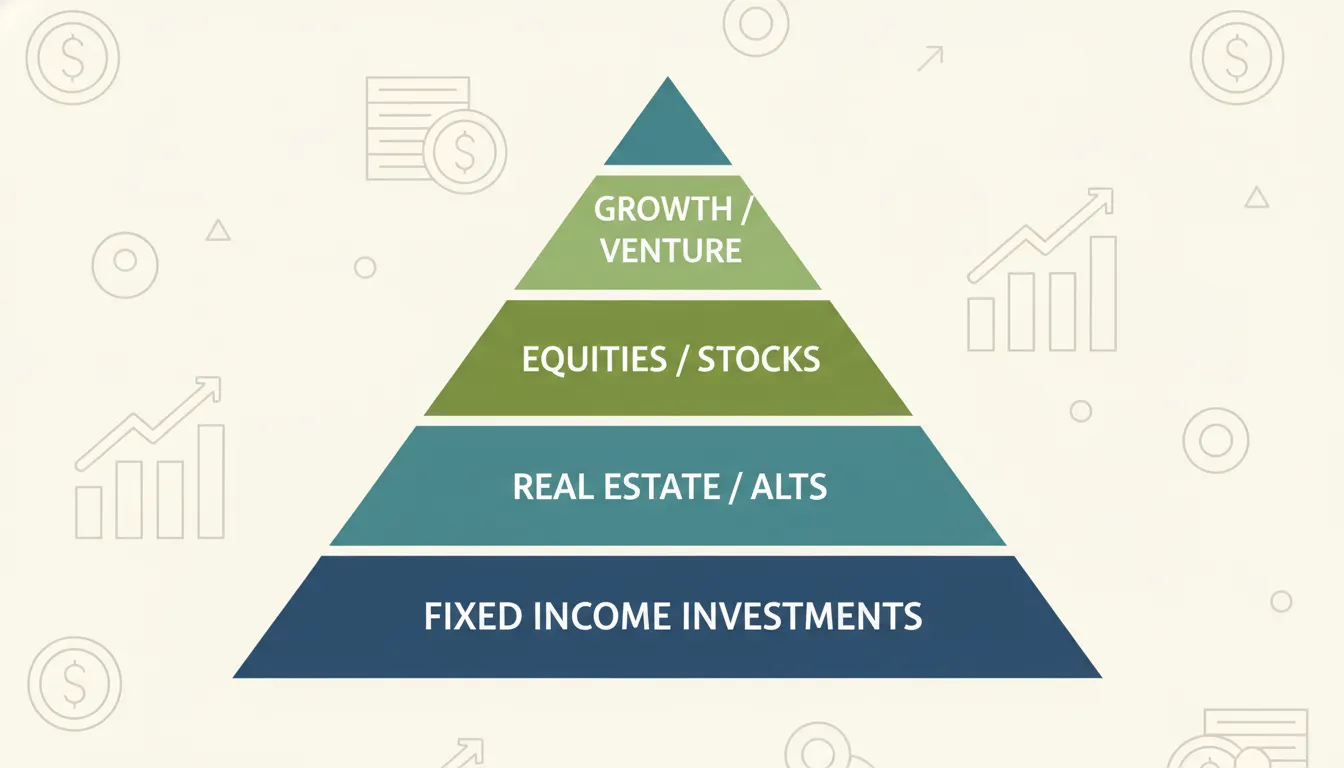
Fixed income is a powerful and accessible tool for those who want to build wealth with more awareness and predictability. It is especially useful for emergency reserves, medium-term goals, and as part of a diversified portfolio. But there is no investment without risk — and fixed income is no exception.
Understanding what you are buying, who the issuer is, what the tax rules are, and what the ideal term is for you is more important than chasing the highest available rate. Information and patience are, in practice, the greatest allies of any investor.
This content is for educational purposes only and does not constitute investment advice. Each person has different goals, risk profiles, and financial situations. Before making any investment decision, consult a qualified professional or investment advisor registered with the CVM.
- Define your goal: is the money for a trip in two years? Retirement? Each term and goal may indicate a different product.
- Market risk: especially in pre-fixed or hybrid bonds, the bond price may fluctuate before maturity. Those who redeem early may receive less than expected — or even lose part of the capital.
- Accessibility: many products have a low minimum value, opening space for beginner investors.
- Predictability: you know, when applying, how the investment will be remunerated.
- Hybrid (or mixed): combines a pre-fixed rate with an inflation index, usually the IPCA (Broad Consumer Price Index). Thus, the application guarantees a real rate above inflation. For example: IPCA + 6% per year.
- Post-fixed: the yield follows a reference indicator, usually the Selic rate or the CDI (Interbank Deposit Certificate). As these indicators change over time, the final yield depends on how they behave throughout the application.
