
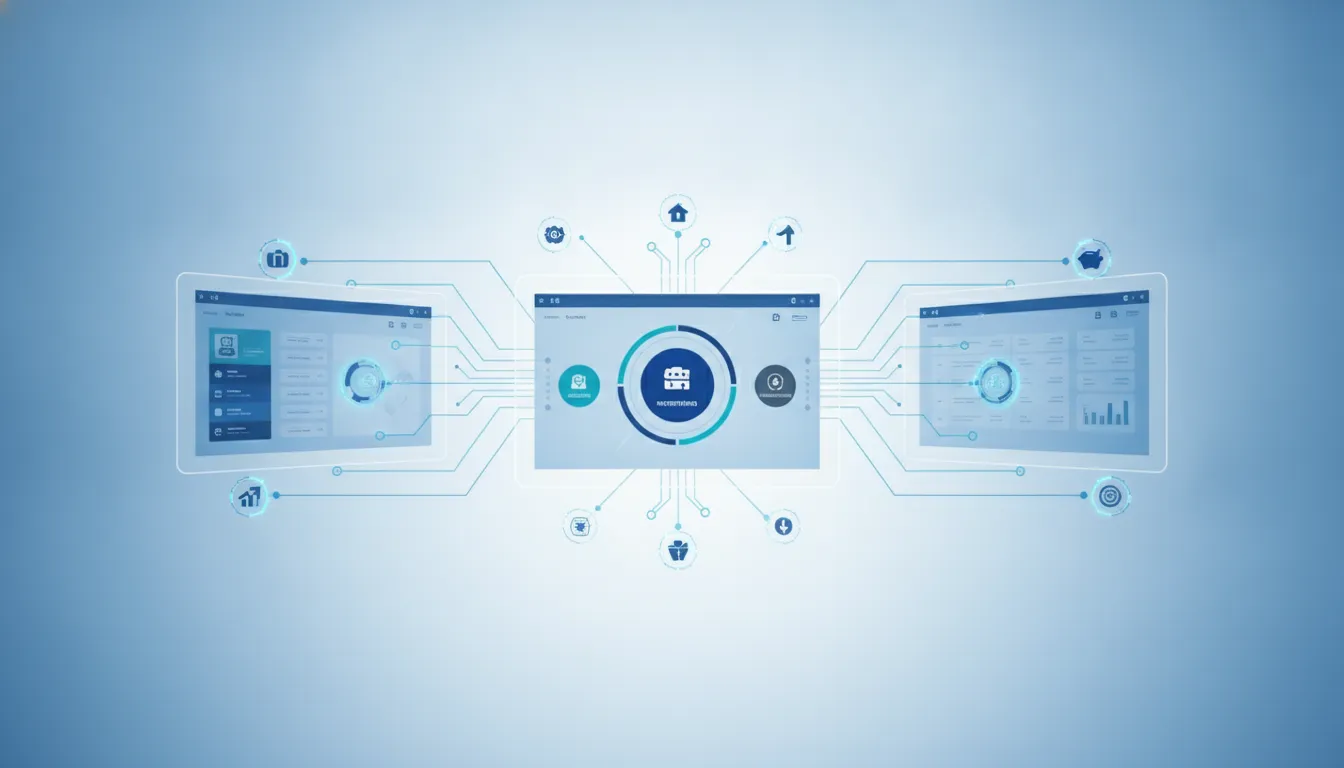
Open Finance Can Simplify Your Financial Life
Imagine having all your bank accounts, credit cards, investments and loans brought together in one place, with a complete view of your financial life just a few taps away on your phone. This is no longer a distant promise: Open Finance is already a reality in Brazil, regulated and operated under the supervision of the Central Bank, and is becoming increasingly relevant in the lives of millions of Brazilians.
The system was implemented gradually starting in 2021 and has evolved over the years to become a robust ecosystem for sharing financial data. In 2026, with the system’s maturity and growing adoption by financial institutions — from major banks to fintechs and credit cooperatives — understanding how Open Finance works has ceased to be a differentiator and has become almost a necessity for those who want to make smarter financial decisions.
In this article, we’ll explain what Open Finance is, how it works in practice, what its real benefits are and, of course, the risks you need to know about before adopting it. The goal is simple: to help you understand whether this tool makes sense for your financial reality.
What is Open Finance, anyway?
Open Finance is a system regulated by the Central Bank of Brazil that allows consumers to share their own financial data between different institutions securely, in a standardized way and with their explicit consent.
The logic is simple, but powerful: your financial data belongs to you, not to the bank. Before Open Finance, if you wanted to apply for a loan at a different institution than your main account, that institution wouldn’t have access to your actual financial history — your income, spending, payment behavior. With Open Finance active, you can authorize this history to be shared, which can result in offers more suitable to your profile.
The system is organized in phases and encompasses different types of data and services:
- Account and registration data: balances, statements, identification data
- Credit data: loan history, financing and credit limits
- Investment data: position in financial products
- Payment initiation: ability to perform transactions from third-party applications
The entire structure is regulated by the Central Bank — you can consult the norms and updates directly on the official Central Bank of Brazil website.
How it works in practice
Open Finance’s operation follows a fundamental principle: nothing happens without your consent. You decide which data to share, with which institutions and for how long.
See how the process works step by step:
- Access the receiving institution’s app or website (the one that will receive your data, such as a fintech, digital bank or investment platform).
- Request data sharing within the receiving institution’s own app.
- You will be redirected to your originating institution (the bank where you already have an account) to authenticate and confirm the sharing.
- Choose which data and for how long you want to share — typical periods range from 90 days to 12 months, renewable.
- Confirm your consent and done: the receiving institution begins accessing authorized data.
- You can revoke consent at any time, directly in your originating institution’s app or the receiving one.
It’s important to note: sharing is always initiated by the consumer, never by the financial institution unilaterally.
Real advantages for your wallet
Open Finance isn’t just technology for technology’s sake. When used properly, it can bring concrete benefits:
Better credit conditions
One of the most practical applications is in credit contracting. By sharing your financial history with a new institution, you present real evidence of your payment behavior. This can result in more competitive interest rates or limits more suitable to your profile — although this is not guaranteed and depends on each institution’s analysis.
Centralized view of finances
Financial management platforms connected to Open Finance can aggregate data from multiple accounts in a single dashboard. If you have accounts at two banks, a credit card at a fintech and investments at a brokerage, you can view everything in one place, making budget control easier.
Portability and competition
The system encourages competition between financial institutions. With your portable data, it becomes easier to migrate to a bank or product that offers better conditions, breaking the historical dependency on the institution where you’ve had an account for years.
Access to more personalized products
With more data available, institutions can offer products more aligned to your actual profile — whether insurance, investments or credit lines — instead of generic offers.
Risks and points of attention
Like any financial tool, Open Finance also presents risks that deserve attention. Knowing them is essential to use the system safely.
Privacy and data usage
By sharing your data, you’re delivering sensitive information about your financial behavior. Therefore, it’s essential to:
- Carefully read the consent terms before confirming any sharing
- Verify the reputation and registration of the receiving institution with the Central Bank
- Regularly monitor which consents are active and revoke them when it no longer makes sense to maintain them
Scams and fraud attempts
The growth of Open Finance has also attracted fraud attempts. No legitimate institution asks you to share passwords or install apps via SMS or WhatsApp links. The process always occurs within the official channels of your own financial institution. Be suspicious of any approach outside this flow.
It’s not a solution for all problems
Open Finance facilitates access to information and can improve credit conditions, but it doesn’t solve debts, doesn’t eliminate CPF restrictions and doesn’t replace solid financial planning. If you’re in debt, for example, the first step is still to regularize your situation — you can better understand this process in our article Bad Credit on Serasa? See How to Regularize.
Security: how the system protects you
The Central Bank has established rigorous technical standards for Open Finance. Participating institutions must be authorized to operate by the Central Bank itself and must follow specific security standards, including the use of standardized and encrypted APIs for data exchange.
Furthermore, the General Data Protection Law (LGPD) applies fully to the Open Finance ecosystem, which means institutions have clear legal obligations about how to store, use and protect your information.
You can also check which institutions are authorized to participate in the system directly on the Central Bank portal, which is good practice before granting any consent.
Open Finance and investments: what changes?
For those who invest, Open Finance opens the possibility of consolidating asset visualization on a single platform, even if you have resources distributed across different brokerages or banks. This makes it easier to analyze your portfolio as a whole.
However, it’s essential to remember that:
- Having centralized access to your investment position doesn’t mean investments have been transferred — assets remain held where they were purchased
- Third-party platforms that display your investment data don’t necessarily have authorization to operate your resources
- Every investment involves risk, and no platform or tool eliminates that risk
For investment decisions, always verify that the professional or platform is properly registered with the Securities Commission (CVM), at cvm.gov.br.
How to start using Open Finance
If you’ve decided to try the system, here’s a simple roadmap to get started safely:
- Check if your current financial institution participates in Open Finance — most regulated banks and fintechs are already part of the system.
- Identify a real need: do you want to compare credit offers? Centralize your finances? This helps you choose the right platform.
- Research the receiving institution on the Central Bank’s website to confirm it’s authorized.
- Read the consent terms carefully: which data will be shared, for what purpose and for how long.
- Initiate sharing through official channels of your bank or receiving platform.
- Monitor your consents periodically and revoke those that are no longer necessary.
Conclusion: a tool, not a magic solution

Open Finance represents an important structural change in the relationship between Brazilians and their financial institutions. For the first time, consumers have a formal and regulated instrument to use their own data as a negotiating currency for better conditions.
But like any tool, its value depends on how it’s used. Without financial planning, spending control and clarity about goals, no system — no matter how sophisticated — will transform your financial life on its own. Open Finance is a starting point, not a destination.
If you’re still building your financial foundation or looking for ways to increase your income to invest more, also check out our article on how to earn extra money in your spare time — because organization and income go hand in hand on this journey.
Use technology to your advantage, but always with information, caution and attention to your rights as a consumer.
Educational Note: This article is exclusively educational and informational in nature. None of the content presented here constitutes a recommendation for investment, financial product or specific service. Each financial situation is unique. For decisions involving investments, credit or personalized financial planning, consult a professional authorized and registered with the Securities Commission (CVM) or the Central Bank of Brazil.
