
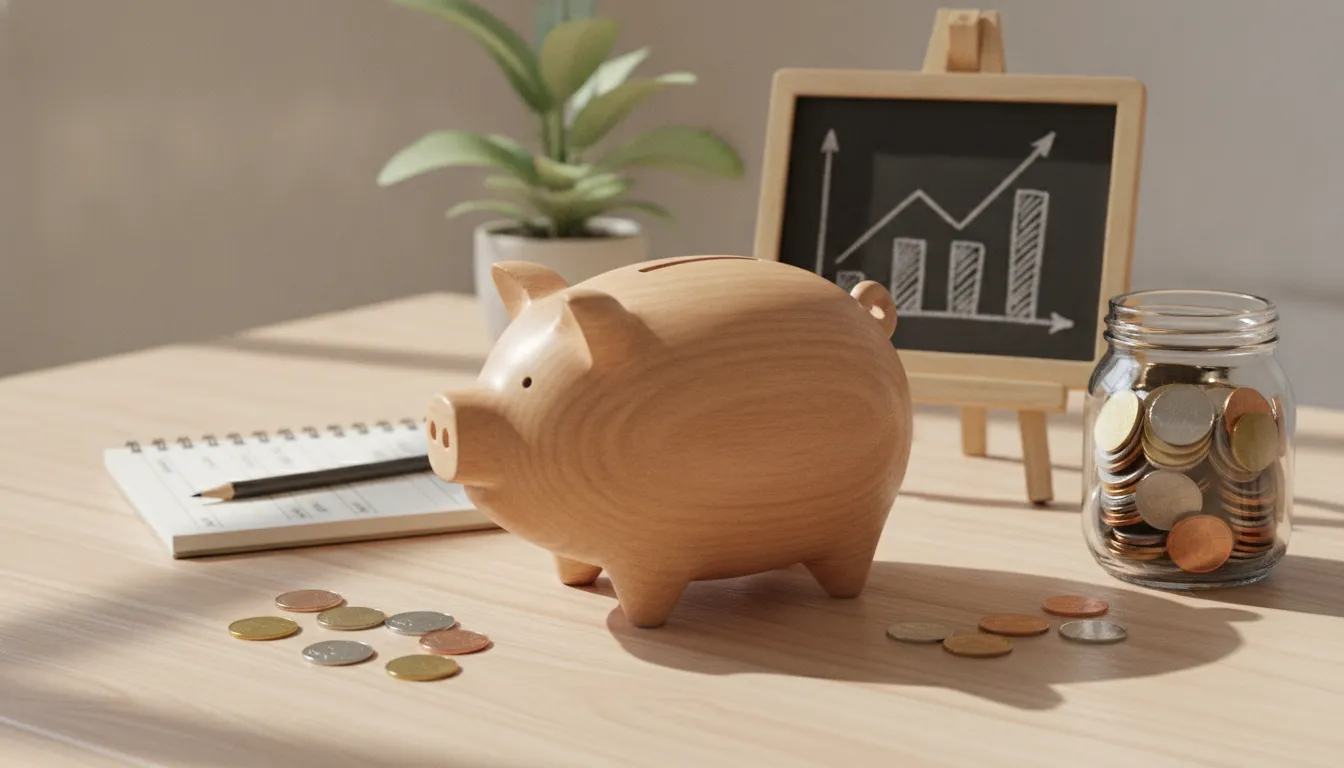
Imagine your 8-year-old receives $20 as a birthday gift and, in less than 30 minutes, it’s all gone on stickers and candy. Or your teenage daughter borrows your credit card “just for one thing,” and you discover the bill weeks later. These scenarios are common in millions of families—not because children are inherently irresponsible, but because no one taught them how money works.
Financial education rarely appears in school curricula in a structured way. The National Common Curricular Base (BNCC) includes it as a cross-cutting theme, but its application is still inconsistent in public and private schools. The result? We reach adulthood making important financial decisions—credit, financing, investment, retirement—with little or no conceptual foundation. The best antidote to this cycle is to start at home, early, with simple, practical everyday conversations.
This article provides practical guidance for parents and guardians who want to transform the family environment into a true school of finance—without needing to be experts, without complicated jargon, and without miraculous promises. Each stage of a child’s life offers unique learning opportunities. Taking advantage of these windows makes all the difference.
Why Teach Financial Literacy in Childhood?
Behavioral psychology studies indicate that habits and attitudes towards money begin to form before the age of 7. This doesn’t mean a 5-year-old needs to understand interest rates, but they can grasp basic concepts like “do we have enough money for this now?” or “if I save a little today, I can buy something bigger later.”
The lack of financial education has measurable consequences. According to data from the National Confederation of Store Managers (CNDL) and the Credit Protection Service (SPC Brazil), family debt remains high, with a significant portion of the population committing future income in a disorganized manner. Although exact numbers vary over time—and you can check the latest reports directly on the CNDL and Central Bank websites—the structural trend of chronic indebtedness is well documented.
Teaching about money at home doesn’t create “greedy” or wealth-obsessed children. It provides them with tools to make conscious decisions, live within real possibilities, and plan for the future with autonomy.
Phase 1: Young Children (3 to 6 years) — Money is Concrete
At this age, thinking is predominantly concrete. Financial abstraction doesn’t work well. What works is physical money, real exchange, and sensory experience.
Practical Ideas:
- Show physical bills and coins. Explain that they represent something people exchange for goods and services.
- When shopping, let the child hand the money to the cashier and receive the change. They learn that money “goes away” when we buy something.
- Use three jars labeled: Spend, Save, and Share. When the child receives any amount—allowance, gift—divide it among the three. This playfully introduces the concepts of spending, saving, and generosity.
Avoid using debit or credit cards as the sole payment method in front of young children. To them, plastic seems like “free money.” Physical money makes the transaction more tangible and understandable.
Phase 2: School-Aged Children (7 to 12 years) — Allowance and Real Choices
This is the phase of real decisions. The child can already do calculations, understand cause and effect, and is capable of delaying gratification—albeit with effort.
Allowance as a Pedagogical Tool
Allowance is one of the most discussed tools in children’s financial education. There is no universally correct amount: what matters is that it is regular, agreed upon in advance, and sufficient to cover some small expenses the child will manage alone (extra snacks, hobbies, small gifts for friends).
Some families choose to link allowance to household chores. Others prefer to give it unconditionally. Both approaches have supporters and critics. The important thing is to be consistent and use the allowance as a starting point for conversations about choices.
The Power of Saying “I Don’t Have Money for That Now”
This phrase, said naturally and without guilt, is one of the greatest lessons a parent can give. It replaces “I don’t want to buy”—which can lead to arguments—with a financial truth: resources are limited, and choices must be made.
Introduce the Concept of Financial Goals
Help the child define something they really want—a toy, a game, an outing. Calculate together how many weeks of allowance will be needed. Put a chart on the fridge and track progress. This teaches planning, patience, and the real satisfaction of achieving something through personal effort.
Phase 3: Teenagers (13 to 17 years) — Budgeting, Work, and First Investments
Adolescence is the time to expand financial vocabulary and introduce more sophisticated concepts, always gradually.
Personal Budgeting
Help the teenager create a simple budget with income (allowance, odd jobs, gifts) and expenses (transportation, food, entertainment, streaming). Simple spreadsheets or free financial control apps work well for this. The goal is not to cut spending harshly, but to create awareness of where the money goes.
First Steps with Investments — Fundamental Concepts
Without promising returns and without indicating specific products as “the best,” it’s possible to explain essential concepts:
- Compound Interest: saved money can generate more money over time. The earlier you start, the greater the effect. Show simulations with small amounts and long terms.
- Risk and Return: every investment carries some level of risk. Investments with higher potential returns generally involve greater risk of loss. There is no “guaranteed money growing fast” in the real world.
- Fixed Income vs. Variable Income: explain the conceptual difference. In fixed income (like Treasury Direct or CDB), the remuneration rules are defined at the time of application. In variable income (like stocks), the result depends on the asset’s performance and can be positive or negative.
To compare how different fixed income products perform in practice, read the article Treasury Selic or Savings: Which Yields More in 2026?, which explains in an accessible way how each option works. Rates vary over time, so always check current values on the official Treasury Direct (tesourodireto.gov.br) and Central Bank (bcb.gov.br) websites.
Work and Own Income
If the teenager is interested and has the opportunity for a first job (legally, from age 16 or 14 as an apprentice, according to the Federal Constitution), encourage it. Working early teaches responsibility, the value of effort, and the difference between own money and received money.
Phase 4: Young Adults (18 years and older) — Autonomy with Responsibility
Upon entering adulthood, the young person should already have a solid foundation: they know money is limited, that choices have consequences, that saving before spending is smarter than the opposite, and that poorly managed debt erodes the future.
At this stage, the central themes are:
- Bank Account and Responsible Credit: credit card is not an extension of income. It is an instrument that, if misused, turns debt into a snowball due to the cost of revolving interest—one of the highest in the Brazilian financial system. Check average rates on the Central Bank portal.
- Planning Major Goals: buying property, student financing, emergency fund. To better understand income and real estate financing, the article Financing Property: Know the Minimum Income You Need offers a clear and updated view.
- Pensions and Long Term: talking about retirement at 20 may seem excessive, but time is the greatest ally of compound interest. Starting early, even with modest amounts, makes a significant difference in the long run.
Common Mistakes Parents Make (and How to Avoid Them)
Common Mistake Why It’s Problematic What to Do Instead Never talking about money at home Creates taboo and misinformation Make it a natural topic in daily life Solving all financial problems for children Eliminates learning through consequences Allow small, safe mistakes Using money as punishment or emotional reward Creates a distorted emotional relationship with money Separate allowance from behavior Giving everything they ask to “compensate” absence Generates a sense of unrealistic abundance Establish clear and consistent limits Only talking about deprivation and scarcity Creates anxiety and fear around money Balance with planning and achievements Conclusion: The Greatest Gift You Can Give

Financial education is not a course, a spreadsheet, or a book. It’s an ongoing conversation, built over years, with real examples, tolerated mistakes, and celebrated achievements. You don’t need to be an economist to start—you just need honesty, consistency, and willingness to make money a normal topic at home.
Every conversation about price at the supermarket, every allowance managed with autonomy, every goal achieved with planning is a lesson no school can replace. And most importantly: children who learn to handle money well grow up with more freedom of choice, less financial anxiety, and greater ability to build the future they want—with reality and groundedness.
Start today. With what you have. In any way you can.
This content is for educational and informational purposes only. It does not constitute investment advice, personalized financial consulting, or specific product recommendations. Each financial situation is unique. For investment decisions or financial planning, consult a qualified professional or investment advisor duly registered with the Securities and Exchange Commission (CVM).
- Planning Major Goals: buying property, student financing, emergency fund. To better understand income and real estate financing, the article Financing Property: Know the Minimum Income You Need offers a clear and updated view.
- Risk and Return: every investment carries some level of risk. Investments with higher potential returns generally involve greater risk of loss. There is no “guaranteed money growing fast” in the real world.
- Compound Interest: saved money can generate more money over time. The earlier you start, the greater the effect. Show simulations with small amounts and long terms.
