
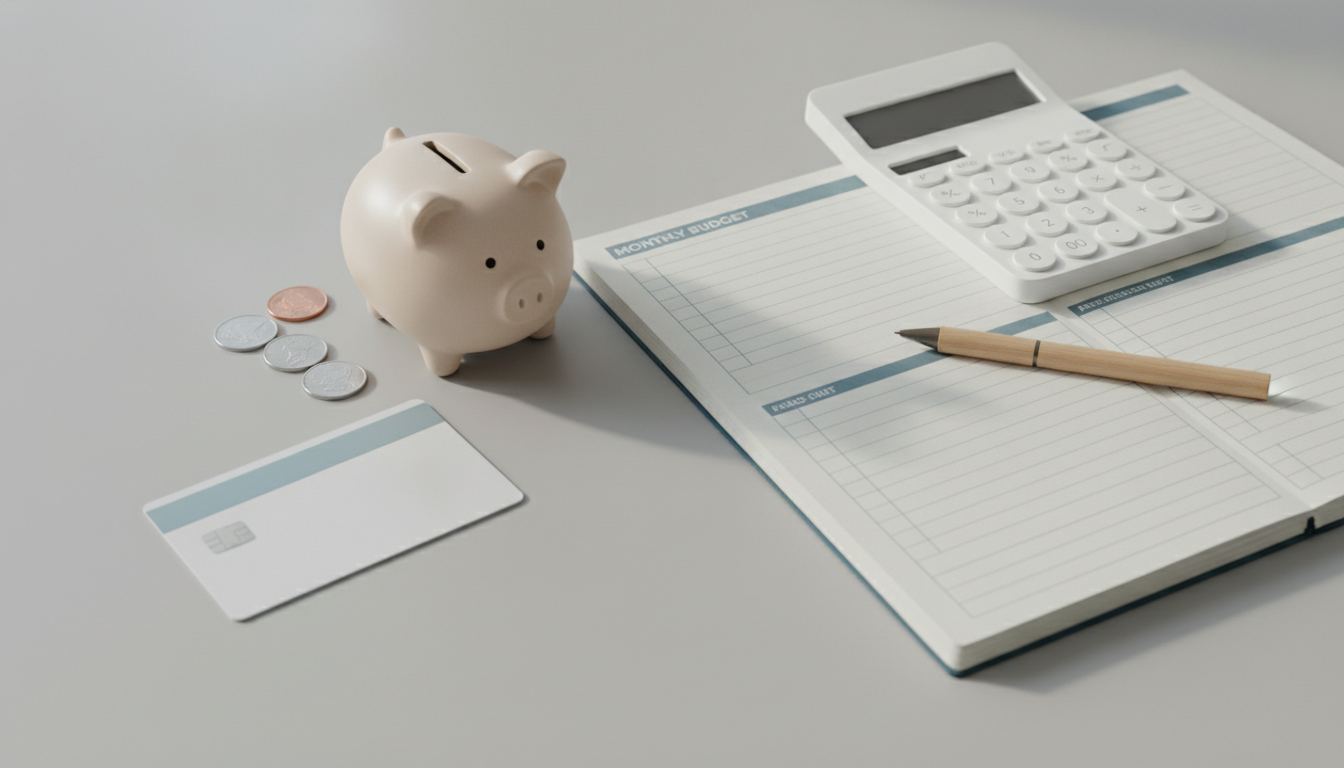
Why does the credit card still derail so many budgets?
Have you ever reached the end of the month without understanding why your credit card bill was so high? This feeling is more common than it seems. The credit card is one of the most present financial tools in the life of Brazilians — practical, accepted almost everywhere, full of benefits like miles and cashback. But this same practicality hides a powerful trap: the illusion that you are spending “less” than you really are.
The problem is not the card itself. The card is neutral. The problem is the lack of control over how it is used. When purchases accumulate throughout the month without monitoring, the bill arrives as an unpleasant surprise — and those who cannot pay the full amount fall into the claws of rotating interest, which are among the highest in the world. According to data from the Central Bank of Brazil, rotating credit interest for individuals exceeded 400% per year in certain recent periods. It is always advisable to check the Central Bank website (bcb.gov.br) to verify current rates, as they change frequently.
The good news is that controlling credit card expenses does not require complicated spreadsheets or extreme sacrifices. It requires method, consistency, and some behavioral changes that, once incorporated into your routine, become automatic. This article will show you how to do this practically and definitively.
Understand how credit cards really work
Before controlling anything, you need to understand the mechanism behind the product.
When you use the card, you are not paying immediately. You are essentially making a promise of future payment. All purchases made during the billing cycle (usually 28 to 31 days) accumulate and are charged at once on the due date.
The danger of minimum payment
Many people do not realize that paying only the minimum amount of the bill is not a solution — it is the beginning of a snowball effect. The unpaid amount enters the so-called rotating credit, where very high interest is charged. After 30 days in the rotating credit, the remaining balance is automatically transferred to deferred balance installments, with equally high interest. The effect is the same: the debt grows quickly.
Credit limit is not income
This is one of the biggest conceptual errors. The available limit on your card does not represent money you have — it represents money you can owe. Treating the limit as an extension of your salary is one of the most common causes of debt.
Map your expenses before any changes
It is not possible to control what you do not know. The first step is to make an honest assessment of where your credit card money goes.
- Access statements from the last three months — most banking apps and financial institutions allow you to view complete history.
- Categorize each expense: food, transportation, entertainment, subscriptions, health, clothing, etc.
- Add up each category and calculate the percentage relative to total spending.
- Identify surprises: forgotten subscriptions, impulse purchases, installment purchases that still weigh on the budget.
This mapping usually generates discomfort — and that is good. Awareness of your own behavior is the starting point for change.
Set a personal limit lower than your card limit
The card operator sets a limit based on credit criteria and income. But this limit does not need to be your spending limit. In practice, you should establish a personal ceiling based on your actual budget.
A useful reference: never commit more than 30% of your net income to credit card expenses. This percentage is guideline and may vary depending on your situation, but it serves as a starting point for those who do not yet have established control.
How to do this:
- Calculate 30% of your monthly net income.
- Set this value as your personal card spending limit.
- If your bank allows it, reduce the contractual limit to near this value — this eliminates the temptation to spend beyond what is planned.
- Some banks and fintech companies allow you to set alerts when you reach a certain percentage of your limit. Activate this feature.
Adopt a weekly monitoring system
Waiting for the bill to arrive at the end of the month to know how much you spent is like driving looking only in the rearview mirror. The secret lies in frequent monitoring, ideally weekly.
Set aside 10 to 15 minutes every week to:
- Open your card app and check transactions from the last seven days.
- Record or confirm the categories of each expense.
- Compare the accumulated total with your personal limit: do you still have room or are you close to your ceiling?
- Make decisions for the following week based on this information.
This practice seems simple, but it completely changes your relationship with money. Instead of being caught off guard by the bill, you start to anticipate and adjust behavior throughout the month.
Tools that can help
Brazil’s Open Finance (regulated by the Central Bank) allows you to connect different accounts and cards in a single financial management app, with your authorization. This greatly facilitates consolidated visualization of spending. Learn more about how this system works and how it can help you at Open Finance: What It Is and How It Can Help You.
Beware of installment payment traps
Splitting payments may seem smart, but it hides serious budget risks.
When installment makes sense:
- The purchase is within your planned budget.
- You would use the money to pay upfront even if you could split without interest.
- The installment does not compromise future budget installments.
When installment is dangerous:
- You split because you do not have the money to pay upfront.
- Installments from different purchases accumulate and “compromise” future bills for months.
- You lose track of the total committed.
A good practice is to maintain a spreadsheet or note with all open installments: product, installment amount, number of remaining installments, and end date. This shows the real “weight” of your card in the coming months, even if the current bill seems reasonable.
Build a financial cushion to always pay in full
The greatest ally of healthy card use is never needing to pay less than the full bill amount. For this, it is essential to have an emergency fund and a monthly budget that balances evenly.
If you do not yet have this financial cushion, the path is:
- Reduce card spending to the minimum necessary while building the reserve.
- Save a fixed amount monthly in a separate account — preferably in a liquid, low-risk product like interest-bearing accounts or short-term CDs with daily liquidity. (Remember: all investments carry risk, even if small in conservative products.)
- Use the card only for expenses you already have money on hand to cover.
This logic seems basic, but it is what separates those who use the card in their favor from those who use it against themselves. If you want to understand how to start organizing your financial life and eventually invest what is left over, the Guide to Start Investing from Scratch in 2026 can be a useful next step.
What to do if debt is already installed
If you already have a balance on rotating credit or overdue installments, the path is different — but not impossible.
Step-by-step to get out of card debt:
- Stop using the card (or reduce to the bare minimum) while you resolve the current debt.
- Negotiate directly with the operator — many offer special conditions for renegotiation, especially outside the court system.
- Contact Serasa Limpa Nome or the consumidor.gov.br platform to access negotiation proposals.
- Prioritize paying off the most expensive debt first (usually rotating or deferred balance installments).
- Avoid taking a loan to pay the card without first carefully comparing rates — in some cases it may make sense, in others it just swaps one expensive debt for another.
If the situation is complex, a financial advisor or the Central Bank’s consumer guidance service can offer solutions.
Conclusion: the card as ally, not villain

Controlling credit card expenses is not a matter of heroic discipline. It is a matter of system. When you understand how the product works, set limits based on your reality, monitor spending frequently, and maintain a reserve to always pay the full bill, the card stops being a threat and becomes what it should be: a convenient tool with real benefits.
Small behavioral changes, maintained consistently, produce significant results over time. Start with mapping the last three months, set your personal limit this week, and schedule your 15 minutes of weekly review. There is no perfect moment — there is the moment when you decide to start.
This content is exclusively educational and informational in purpose. No information herein constitutes investment recommendation, personalized financial advice, or indication of specific products. For financial decisions appropriate to your individual situation, consult a qualified professional or investment advisor properly registered with the Securities Commission (CVM).
