

LCI and LCA: What They Are, How They Work, and If They’re Worth It for You
Have you ever visited a bank branch or accessed your bank app and encountered acronyms like LCI and LCA being advertised with promises of income tax exemption? These products frequently appear on the shelves of banks and brokerages, especially when the Selic rate is high. But do they really deliver what they promise?
In this article, we will explain what LCI and LCA are, how they work in practice, the rules every investor needs to know—including regulatory changes that have come into effect—and, most importantly, in what situations they might (or might not) make sense within your financial strategy. The idea is not to convince you to buy or avoid these products but to give you the knowledge needed to make an informed decision.
What Are LCI and LCA?
LCI stands for Real Estate Credit Bill, and LCA stands for Agribusiness Credit Bill. Both are fixed-income securities issued by financial institutions—mainly banks—with the aim of raising funds to finance specific sectors of the economy.
- The LCI allocates the funds raised to finance the real estate sector (credit for construction companies, housing financing, etc.).
- The LCA directs the funds to agribusiness (costs, investment, and marketing of agricultural products).
From the investor’s perspective, they work similarly: you lend money to the bank and, in return, receive compensation over a specified period. The yield can be:
- Pre-fixed: rate defined at the time of application (e.g., “X% per year”).
- Post-fixed: linked to an index, usually the CDI (Interbank Deposit Certificate), which closely follows the Selic rate.
- Hybrid: combination of a pre-fixed rate with an inflation index, such as the IPCA.
The CDI and Selic are defined periodically. To find the current values, visit the official website of the Central Bank of Brazil—never rely on a number you read somewhere without verifying the date.
The Major Advantage: Income Tax Exemption for Individuals
The main feature that makes LCI and LCA attractive is the income tax exemption for individuals on earnings. This rule is provided for in Brazilian legislation and represents a real advantage over other fixed-income products, such as the CDB (Bank Deposit Certificate), which have regressive taxation.
In the income tax table for fixed income, the rates are:
| Application Term | Income Tax Rate |
|---|---|
| Up to 180 days | 22.5% |
| From 181 to 360 days | 20% |
| From 361 to 720 days | 17.5% |
| Above 720 days | 15% |
In other words, in a CDB that yields 100% of the CDI, you don’t keep 100%—the income tax takes a share. In LCI or LCA, the gross yield is the same as the net yield (for individuals).
This means that an LCI or LCA that pays, for example, 88% of the CDI can be more profitable than a CDB that pays 100% of the CDI, depending on the term. But beware: this comparison requires calculation. Don’t assume that the exemption always compensates—it is necessary to do the math with real numbers at the time.
Minimum Term Changes: Rules You Need to Know
This point is critical. As of January 1, 2024, the National Monetary Council (CMN) changed the minimum term rules for LCI and LCA redemption. Before the change, many securities had liquidity in short terms. With the new regulation:
- LCI: minimum term of 12 months for redemption (in cases linked to financing operations with fixed or mixed interest rates) or 9 months in other cases.
- LCA: minimum term of 9 months for redemption.
In practice, this means that you cannot redeem the money before maturity—or, in some cases, before a minimum term—without losing profitability or simply being unable to redeem. Always check the exact term at the time of contracting and confirm the current rules with the issuing institution or on the Central Bank’s website.
This change was especially relevant for those who used LCI and LCA as part of their emergency reserve. This use may be inappropriate precisely due to the lack of liquidity. To better understand how to structure your emergency reserve, see our article: How Much to Really Save in an Emergency Reserve.
FGC Protection: An Important Positive Point
LCI and LCA have coverage from the Credit Guarantee Fund (FGC), a private entity that protects investors in case of bankruptcy of the issuing institution. The coverage limit is R$ 250,000 per CPF per financial conglomerate, with a global cap of R$ 1,000,000 per CPF every four years.
This is a real and relevant protection—but does not eliminate risk. If the invested amount exceeds the FGC cap, the portion above is not guaranteed. Furthermore, the process of activating the FGC in case of a bank failure can take time.
Advantages and Disadvantages Compared to Other Products
Understanding LCI and LCA requires comparing them with alternatives. Here’s an overview:
| Feature | LCI / LCA | CDB | Treasury Direct |
|---|---|---|---|
| Income Tax Exemption (Individuals) | ✅ Yes | ❌ No | ❌ No |
| FGC Coverage | ✅ Up to R$ 250,000 | ✅ Up to R$ 250,000 | ❌ No (but it’s federal debt) |
| Daily Liquidity | ⚠️ Generally not | ✅ Some offer | ✅ Treasury Selic has liquidity |
| Minimum Term | ⚠️ 9 to 12 months | Variable | No mandatory minimum term |
| Profitability | Depends on issuance | Depends on issuance | Public and transparent |
Advantages of LCI and LCA:
- Income tax exemption for individuals, which can increase net returns.
- FGC coverage (within limits).
- Diversity of terms and indexes available in the market.
Disadvantages and Risks:
- High minimum term reduces liquidity—not suitable for emergency reserves.
- Lower profitability compared to other products may not compensate for the exemption—depends on the CDI percentages offered.
- Credit risk of the issuing institution: smaller banks tend to offer higher rates but also present higher risk.
- Less transparency in secondary market pricing.
How to Evaluate If It’s Worth It: The Calculation That Matters
The most important step is to make the net profitability comparison. The reasoning is simple:
- Find out the gross yield of the compared product (e.g., CDB at X% of the CDI).
- Apply the income tax rate corresponding to the intended term (according to the regressive table above).
- Calculate the net yield of the CDB.
- Compare with the CDI percentage offered by the LCI or LCA—which is already net.
If the LCI offers 87% of the CDI and the CDB offers 110% of the CDI with an income tax of 17.5% (term of 361 to 720 days), the net CDB would be equivalent to approximately 90.75% of the CDI. In this hypothetical example, the CDB would come out ahead.
Attention: these numbers are illustrative only. Real rates vary daily according to the market. Always compare with the values available at the time of application.
Other questions you should ask before investing:
- Does the product’s term match my goal?
- Does the total amount in this institution exceed the FGC cap?
- Can I go without this money for the required time?
- Is the issuing institution solid and regulated by the Central Bank?
For Whom LCI and LCA Might Make Sense?
Without making a personalized recommendation—because it depends on your profile, goals, and financial situation—it’s possible to say that these products tend to be more suitable for:
- Investors who already have an emergency reserve formed in high-liquidity products (such as Treasury Selic or CDB with daily liquidity).
- Those with medium-term goals (buying an asset, traveling, partial retirement) with a term compatible with the paper’s maturity.
- People who pay income tax on other earnings and want to optimize their portfolio with exempt assets.
For those still forming an emergency reserve, it’s worth reading the article How Much to Really Save in an Emergency Reserve before making any investment decisions in products with a waiting period.
Conclusion: Exemption Is Not Synonymous with Better Investment
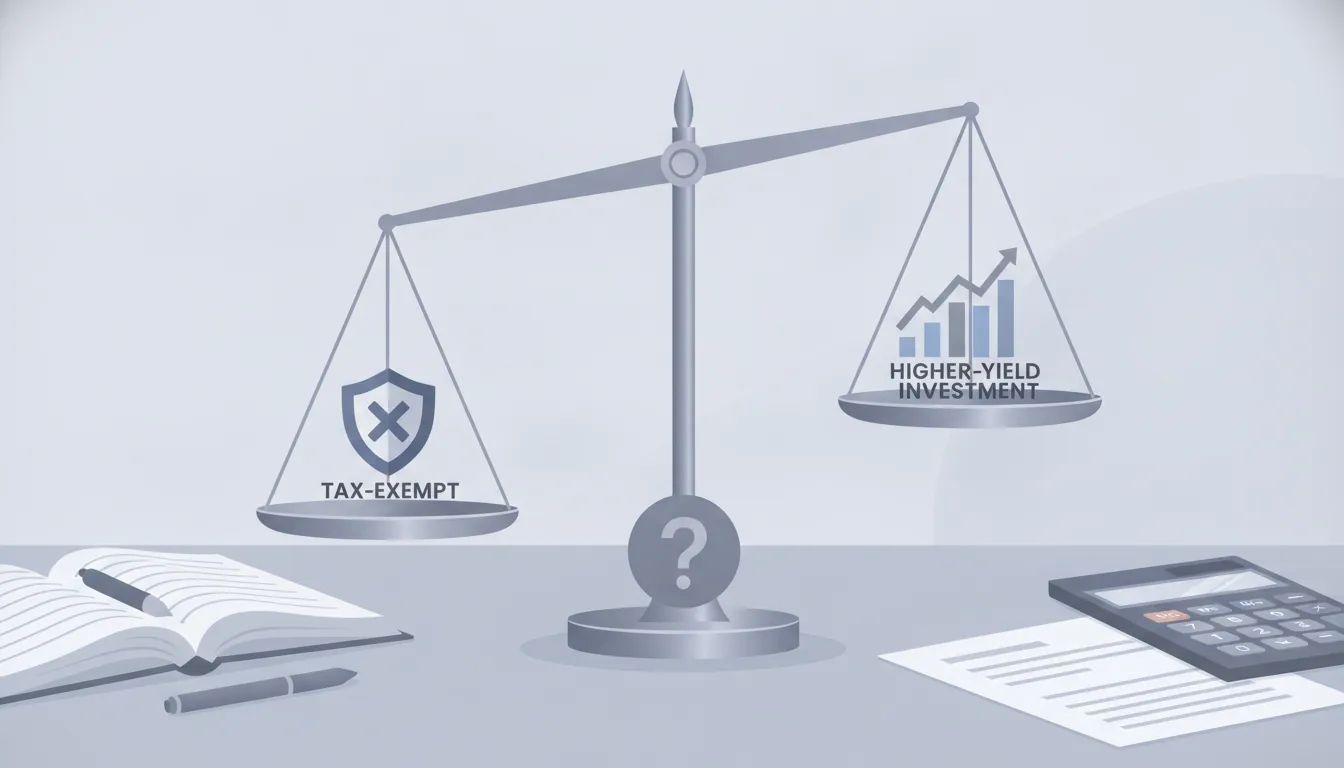
LCI and LCA are legitimate, regulated products that offer a real tax advantage. But the income tax exemption alone does not guarantee that they will be the best option for your money. The net profitability depends on the CDI percentages practiced in the market, the term, the risk of the institution, and your own financial context.
The most important thing is to compare products with the same criteria, understand the liquidity rules before applying, and never invest money that you might need in the short term in assets with a long waiting period. Knowledge is the best filter against bad decisions—and the calculation should always be done with current data, not vague promises.
This content is for educational and informational purposes only. It does not constitute investment advice, financial advisory, or an offer of any product. Each investor has a unique profile, goals, and financial situation. To make investment decisions, consult a professional or investment advisor duly registered with the Securities and Exchange Commission (CVM).
