

Understanding Management Fees: Impact on Your Investment Returns
You research an investment fund, see an attractive historical return, and decide to invest your money. Months later, you notice that the balance has grown less than expected. What happened? In many cases, the answer lies in a cost that goes unnoticed by many novice investors: the management fee. It is silently deducted directly from the fund’s assets before you see any numbers on the screen.
Understanding how this fee works is not a technical detail reserved for specialists. It is a fundamental skill for anyone who wants to make more informed decisions with their money. After all, a seemingly small difference — from 0.5% per year to 2% per year, for example — can represent a significant amount over ten or twenty years of investment.
In this article, we will explain what the management fee is, how it is charged, where it appears, its real impact on returns, and how you can use this knowledge to better evaluate your financial choices.
What is the Management Fee?
The management fee is a remuneration charged by financial institutions — fund managers, brokers, or administrators — for the service of managing and administering an investment fund. In other words, it is the price you pay for professionals to make allocation, buying, and selling decisions within the fund on your behalf.
It is expressed as an annual percentage of the fund’s net assets. For example, a fee of 1.5% per year means that each year, 1.5% of the total amount invested in the fund is allocated to the managing and administering institution, regardless of whether the fund made a profit or loss during the period.
This is a crucial point: the management fee is charged on the assets, not on the profit. This means it applies even when the fund shows negative returns — which amplifies the impact of losses during periods of poor performance.
How the Fee is Charged in Practice
Most investors never see an explicit charge for the management fee in their account. This is because it is deducted daily from the fund’s assets, proportionally. The annual fee is divided by the business days of the year and deducted from the value of the shares every day.
In practice, the returns disclosed by the funds are already presented net of the management fee — that is, the return you see reported is what remains after the fee is deducted. This makes the charge less visible but no less real.
To check the management fee of any fund registered in Brazil, you can access:
- The CVM (Securities and Exchange Commission) website at cvm.gov.br, where all funds are required to disclose their fees in the regulations;
- The B3 platform, for funds traded on the stock exchange (such as ETFs and FIIs);
- The website of the manager or broker where the fund is distributed.
Where the Management Fee Appears
The management fee is present in different types of financial products. Here are the main ones:
Traditional Investment Funds
These are fixed income, multimarket, equity, and currency funds offered by banks and brokers. Fees vary widely depending on the type of management and institution. Active management funds — where a manager makes decisions seeking to outperform a benchmark index — tend to have higher fees. Meanwhile, passive management funds — which simply replicate an index, like the Ibovespa — usually have lower fees.
ETFs (Exchange Traded Funds)
ETFs are exchange-traded funds that generally replicate indices. In Brazil, the management fee for ETFs listed on B3 is usually significantly lower than that of active funds. To check the current fees of each available ETF, consult the B3 or the responsible manager’s website.
Real Estate Funds (FIIs)
FIIs also charge a management fee, which directly impacts the income distributed to shareholders. As with other funds, this information is available in each FII’s regulations, accessible on the CVM and B3.
Private Pension Plans (PGBL and VGBL)
Pension plans typically have management fees that vary widely between institutions. It is one of the most important points to compare when choosing a plan, as the long term of these investments amplifies the effect of any cost.
The Real Impact on Your Returns
To understand why the management fee deserves attention, it is necessary to think about the effect of compound interest over time. In long-term investments, small percentage differences have significant impacts on the final result.
Consider a hypothetical and simplified example, for educational purposes only:
| Scenario | Initial Capital | Gross Annual Return | Management Fee | Net Annual Return |
|---|---|---|---|---|
| A | R$ 10,000 | 10% per year | 0.5% per year | ~9.5% per year |
| B | R$ 10,000 | 10% per year | 2.0% per year | ~8.0% per year |
| C | R$ 10,000 | 10% per year | 3.0% per year | ~7.0% per year |
Over 20 years with compound interest, the accumulated difference between Scenario A and Scenario C can represent a very significant amount — potentially tens of thousands of reais, depending on the amount invested. This example is for illustrative purposes only. Past performance does not guarantee future results, and all investments involve risks.
The key point is: the higher the management fee, the higher the fund’s gross return needs to be for you, the investor, to come out ahead. An actively managed fund with a 2% annual fee needs to consistently outperform a passive fund with a 0.2% annual fee by 1.8 percentage points per year just to break even on the net result — which historically does not always happen.
Management Fee vs. Performance Fee
It is important not to confuse the management fee with the performance fee, which is another type of charge present in some funds. While the management fee is always charged, the performance fee is charged only when the fund exceeds a benchmark index (such as the CDI or Ibovespa).
Some funds charge both fees simultaneously. Others charge only the management fee. Always read the fund’s regulations to understand the complete cost structure before investing.
Additionally, there are other costs that may appear depending on the product: custody fee (charged in some cases by the Treasury Direct — check the current conditions on the official Treasury Direct website at tesouro.fazenda.gov.br), come-cotas (advance income tax in long-term funds), and exit fee in early redemptions. Each cost reduces the final investment result.
How to Evaluate if a Management Fee is Fair
There is no single answer to this question, but some criteria help in the analysis:
- Compare with the benchmark: Does the fund consistently deliver returns above the benchmark index, even after deducting the fee? Check the long-term history, not just the last few months.
- Compare with similar alternatives: Are there funds with a similar strategy and lower fees? The CVM and investment platforms allow you to compare funds with similar characteristics.
- Evaluate the type of management: Passive funds with high fees rarely justify themselves, as they are simply replicating an index. High-quality active funds may, in some cases, justify higher fees — but this needs to be proven by a consistent performance history.
- Consider the term: The longer the investment horizon, the more relevant each tenth of a percentage point in the fee becomes.
- Read the regulations: All information about fees is available in the fund’s regulations, a public document accessible on the CVM. Do not invest without reading at least the cost section.
If you want to better understand how much your assets need to grow to sustain your lifestyle in the future, the article How Much You Really Need to Save to Live Off Your Investments provides an important perspective on long-term planning.
Conclusion: The Fee You Don’t See Might Be the Most Important
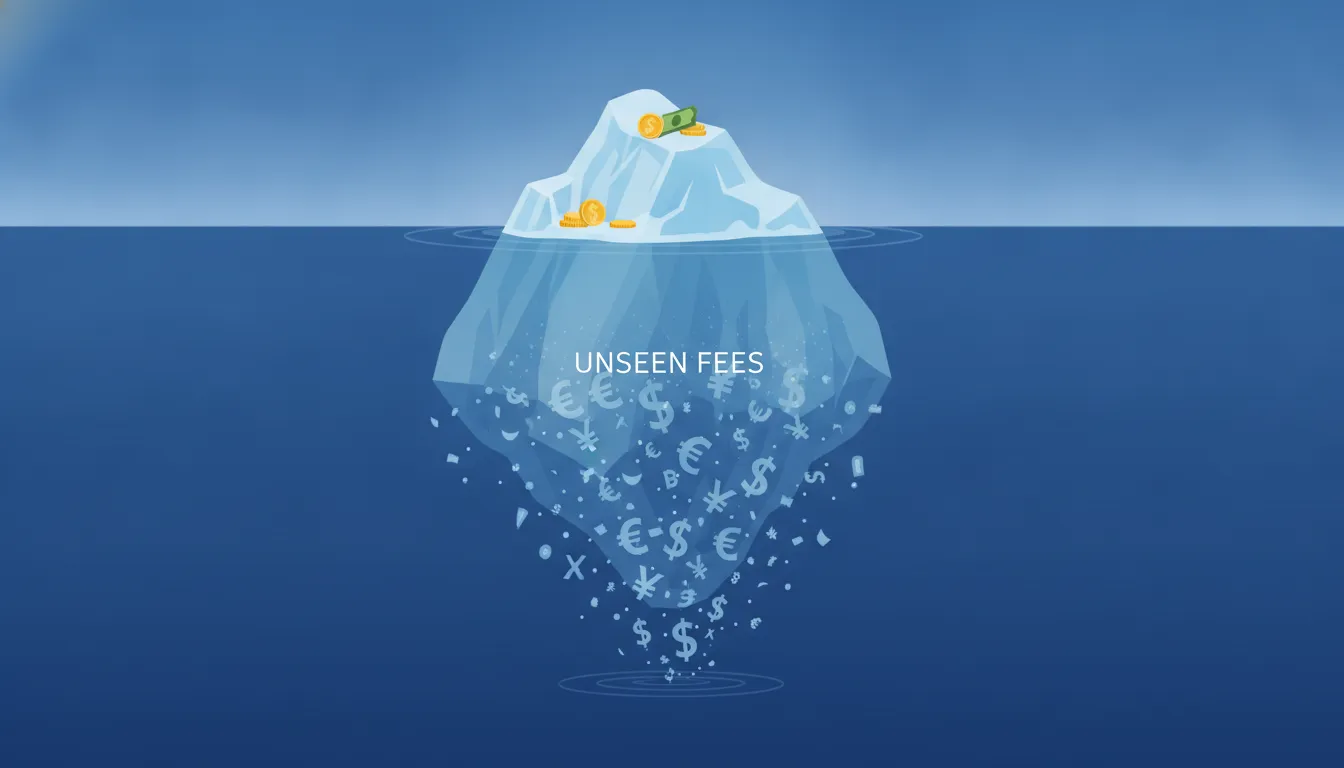
The management fee is one of the most underestimated costs in the investment world — not because it is difficult to understand, but because it is charged invisibly, diluted daily. Investors who ignore this number are making decisions with incomplete information.
This does not mean that funds with higher fees should be automatically dismissed. It means you need to question: is this cost justified by the performance? If a fund charges high fees and delivers mediocre results, something is wrong. If it charges high fees and consistently outperforms the benchmark by a wide margin, the conversation is different — although past results do not guarantee the future.
The conscious investor reads regulations, compares fees, uses official sources like CVM, B3, and Treasury Direct, and understands that every real paid in fees is a real that is not reinvested. Small savings in costs, over the years, can make a real difference in your wealth.
To better organize your finances and understand how much of your budget is left to invest, it is worth checking out the article How Much Does It Cost to Live Alone in Brazil in 2026?, which provides a practical view on expenses and personal financial planning.
This article is for educational and informational purposes only. It does not constitute investment advice, financial consultancy, or a suggestion to buy or sell assets. Mentioned returns are hypothetical and used for educational purposes only. All investments involve risks, including the possibility of losing invested capital. For investment decisions suitable to your profile and objectives, consult a certified professional or investment advisor duly registered with the CVM (cvm.gov.br).
