

Choosing Between Payroll-Deducted Loans and Personal Loans: Which is Right for You?
Are you in need of a loan but unsure whether to choose a payroll-deducted loan or a personal loan? This is a common financial decision among Brazilians and one that often leads to confusion. Making the wrong choice can result in paying hundreds or even thousands more in interest over time, affecting your budget in ways that may only become apparent months later.
The good news is that understanding the difference between these two loan types doesn’t require an economics degree. It simply requires clarity on how each works, who can access them, and what the real costs involved are. This article will help you make this comparison with precise information and without misleading shortcuts.
Let’s be clear from the start: this content is educational. The goal is to provide you with tools to think better, not to suggest which product you should choose. Credit decisions depend on your specific situation, and by the end of the article, you’ll understand why.
What is a Payroll-Deducted Loan?
A payroll-deducted loan is a type of loan where the installments are deducted directly from the borrower’s paycheck or benefit. This means the bank or financial institution receives the payment before the money even reaches your account.
This mechanism significantly reduces the risk of default for the financial institution — after all, it doesn’t rely on you remembering to pay the bill. Therefore, the interest rates charged on payroll-deducted loans tend to be much lower than those on other personal credit lines.
Eligible for payroll-deducted loans are:
- Federal, state, and municipal public servants
- Retirees and pensioners of the INSS
- Employees of private companies with agreements with financial institutions
- Military personnel of the Armed Forces
Income commitment limit: there is a legal cap on payroll deductions. For federal public servants and INSS beneficiaries, the consignable margin is regulated and limits how much of the income can be committed to payroll-deducted loan installments. This percentage may vary with legislative changes, so always check the INSS website (inss.gov.br) or the portal of the agency where you work to verify the current value.
What is a Personal Loan?
A personal loan is a loan without a specific purpose — you can use the money as you wish — and without real collateral or payroll deduction. Approval depends on credit analysis, CPF history, score, and declared income.
Without the security of automatic deduction, the risk of default for the institution is higher. This directly translates into higher interest rates, often significantly so.
Personal loans are available to any individual, regardless of being a public servant or retiree. You just need to have a bank or fintech account and pass the credit analysis. The ease of access is a positive point — but this broader access comes at a cost.
The Practical Interest Rate Difference
This is the most important part of this comparison. The difference in rates between the two types is not small — it can be huge.
The Central Bank of Brazil publishes monthly the average rates practiced by financial institutions in the country. These data are available on the Bacen portal (bcb.gov.br), in the Statistics section. Always check Bacen to verify the current average rates, as they vary according to monetary policy and market conditions.
What Bacen’s historical data consistently show is that:
- Payroll-deducted loans (especially for public servants and INSS retirees) have some of the lowest rates in the personal credit market
- Non-payroll-deducted personal loans offered by banks and fintechs usually have significantly higher rates
- Credit card revolving credit and overdrafts are among the most expensive in the market
To get a real sense of the impact of interest, use a loan simulator and compare the CET — Total Effective Cost. The CET is the index that represents all loan charges (interest, fees, mandatory insurance), and by law must be informed before contracting. Never compare just the nominal interest rate: always compare the CET.
Advantages and Disadvantages of Each Type
Payroll-Deducted Loan
Advantages:
- Generally lower interest rates
- Fixed and predictable installments
- Less bureaucracy for those who already have available margin
- Easier approval, even for those with negative credit in some cases
Disadvantages:
- Available only to specific groups (servants, retirees, employees of affiliated companies)
- Automatic payroll deduction reduces your monthly liquidity regardless of your financial situation
- Risk of over-indebtedness if the borrower takes multiple payroll-deducted loans simultaneously
- In case of dismissal, the remaining balance may be charged differently, depending on the contract
Personal Loan
Advantages:
- Accessible to any individual
- Flexibility in payment (you control when to pay)
- No link to employer or benefit
- Some fintechs offer competitive conditions with quick approval
Disadvantages:
- Interest rates tend to be considerably higher
- More restrictive approval for those with low scores or a history of default
- Higher risk of spiraling debt, especially if installments are not paid on time
How to Compare Offers Smartly
Before signing any contract, follow these steps:
- Request a simulation with the CET — every financial institution is required to inform the Total Effective Cost before contracting. This is a requirement of the Central Bank.
- Compare at least three offers — traditional banks, fintechs, and credit cooperatives can have very different conditions for the same customer profile.
- Calculate the total paid at the end — multiply the installment by the number of months and compare it with the amount you are requesting. The difference is the real cost of the credit.
- Check the available consignable margin — if you are a servant or retiree, check your margin before contracting so as not to commit all future income.
- Read the contract before signing — pay attention to mandatory insurance clauses, registration fees, and conditions in case of early settlement.
- Check the institution with Bacen — before closing a deal with any bank or fintech, verify if the institution is authorized to operate by the Central Bank at bcb.gov.br.
When Each Makes Sense
There is no single answer. But some situations make the choice more evident:
Consider payroll-deducted loans when:
- You are eligible (servant, retiree, employee of an affiliated company)
- You need a considerable amount with long installments
- You want maximum predictability in the budget
- You seek the lowest possible rate among the options available to you
Consider personal loans when:
- You do not have access to payroll-deducted loans
- You need payment flexibility
- The amount is smaller and the term shorter (the impact of higher interest is less)
- You have a fintech offer with a competitive CET for your profile
In both cases, a fundamental rule applies: take credit with a clear purpose and a realistic payment plan. Credit taken without planning becomes debt — and debt without control compromises your financial health in the long term. If you are still building the habit of planning your finances, the article How to Save Money Every Month Without Hassle can be a good starting point.
The Danger of Over-Indebtedness
A warning that cannot be left out of this conversation: Brazil approved in 2021 the Over-Indebtedness Law (Law No. 14.181/2021), which brought more protection to individual consumers with good-faith debts. But the best protection is still not getting into this situation.
Accumulating multiple payroll-deducted contracts, using personal loans to pay another credit, or taking a loan without knowing exactly how you will pay it are behaviors that greatly increase the risk of financial imbalance. Before contracting any credit, it is worth asking yourself: if my income drops in the coming months, can I maintain this commitment?
Understanding where you stand financially also helps in this decision. Calculating your net worth — the difference between what you have and what you owe — is a simple exercise that provides clarity about the real need (or not) to take credit.
Practical Conclusion
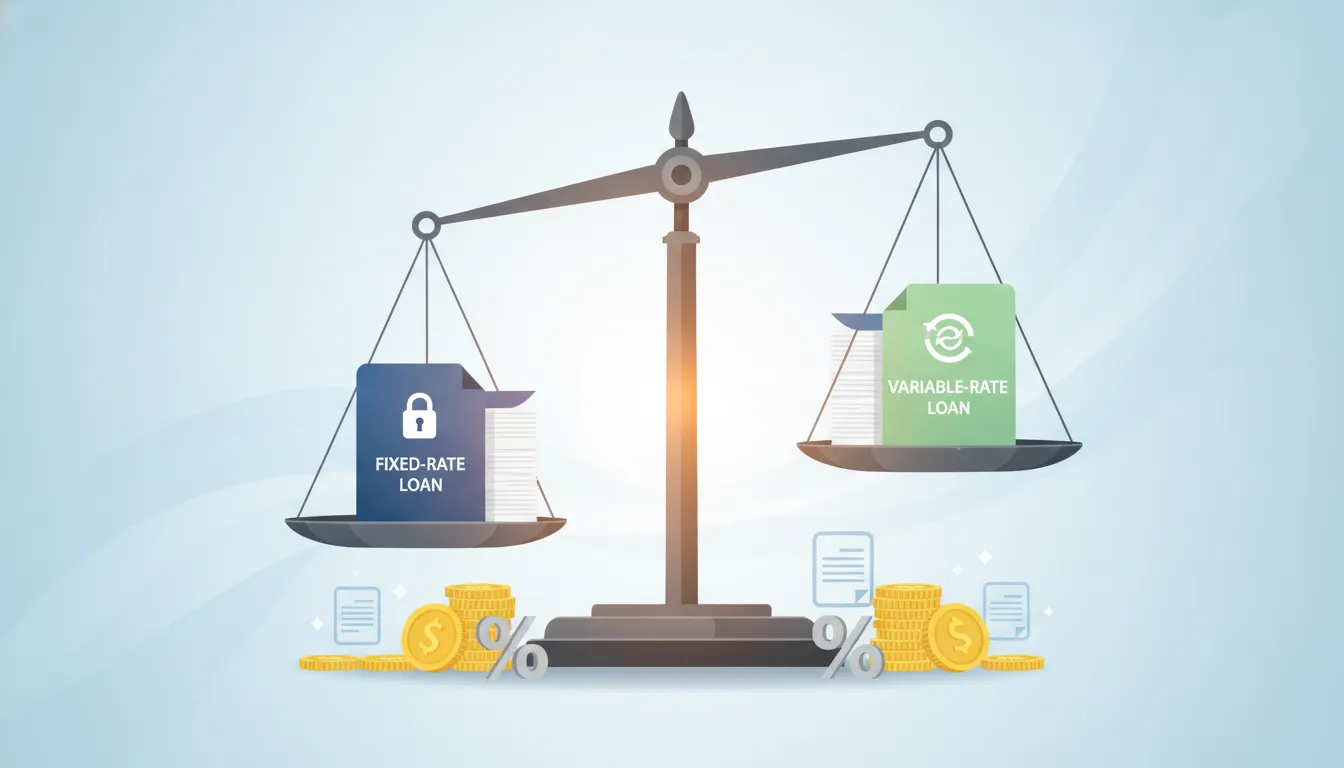
Payroll-deducted loans tend to be the lower-cost option for those who have access to them, due to the guarantee structure they offer institutions. Personal loans are more accessible but generally more expensive. The ideal choice depends on your profile, your eligibility, and, most importantly, the real comparison between the total costs of the offers available to you.
Regardless of the chosen modality: research, compare the CET, read the contract, and only contract what is necessary — with a clear payment plan. Well-used credit is a tool. Poorly managed credit is a trap.
> Educational Note: This article is purely educational and informational. It does not constitute a recommendation for contracting any specific financial or credit product. The conditions of each modality vary according to profile, institution, and economic moment. For personalized credit or financial decisions, consult a qualified professional or an investment advisor registered with the CVM.
- Compare at least three offers — traditional banks, fintechs, and credit cooperatives can have very different conditions for the same customer profile.
- Request a simulation with the CET — every financial institution is required to inform the Total Effective Cost before contracting. This is a requirement of the Central Bank.
- Non-payroll-deducted personal loans offered by banks and fintechs usually have significantly higher rates
- Payroll-deducted loans (especially for public servants and INSS retirees) have some of the lowest rates in the personal credit market
