
What is Open Finance and Why You Should Pay Attention to It
Imagine being able to walk into a bank and say: “I’ve been a client for five years at another institution, have a good payment history, and my finances are organized — offer me better conditions.” Now imagine this happening automatically, digitally, and with just a few clicks. This is essentially the concept behind Open Finance: a system that puts you, the consumer, at the center of decisions about your financial data.
In Brazil, Open Finance was regulated and implemented by the Central Bank of Brazil (BCB) in phases starting in 2021, evolving from the initial concept of Open Banking to a broader ecosystem that involves not only accounts and credit but also investments, insurance, pensions, and foreign exchange. By 2026, the system is fully operational, with tens of millions of active consents and growing participation from banks, fintechs, and credit cooperatives. Yet, many people do not know exactly what it is, how it works, and — most importantly — if it is really worth joining.
In this article, we will clearly and objectively explain everything you need to know about Open Finance: how it works, its real advantages, the risks involved, and how to participate consciously and safely.
What Exactly is Open Finance?
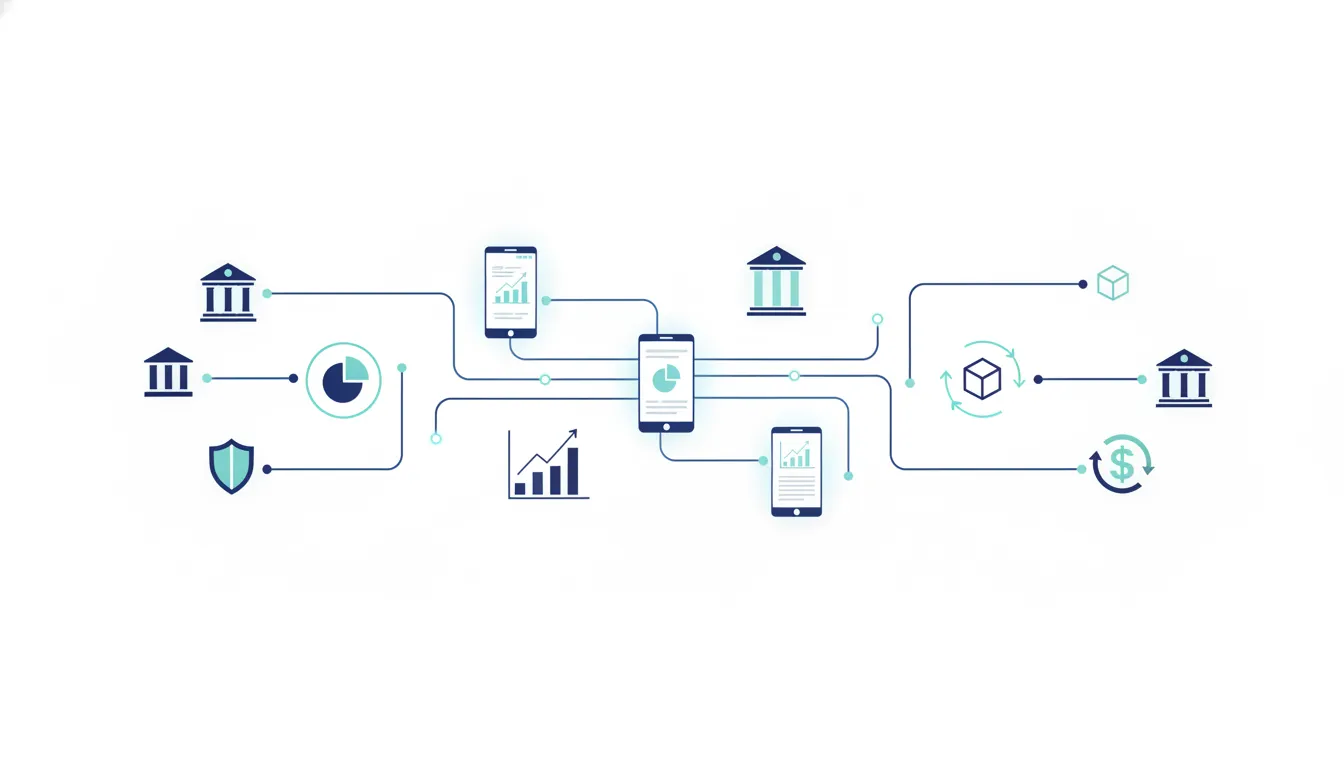
Open Finance is a system regulated by the Central Bank that allows consumers to authorize the sharing of their financial data among different participating institutions — whenever they want, for as long as they determine.
The logic is simple: today, your financial information is “locked” in each bank or brokerage where you have an account. Open Finance creates a standardized and secure infrastructure for this information to circulate among authorized institutions, always with your explicit consent.
The Difference Between Open Banking and Open Finance
Many people use the two terms interchangeably, but there is an important distinction:
- Open Banking was the name of the initial phase (2021–2022), focusing on account, card, and credit data.
- Open Finance is the expansion of this concept to include investments, insurance, supplementary pensions, and foreign exchange operations, making the ecosystem much more comprehensive.
In Brazil, the Central Bank officially uses the term Open Finance to describe the complete system currently in effect.
How Does Open Finance Work in Practice?
The operation of Open Finance relies on open and standardized APIs — technological interfaces that allow different systems to “communicate” securely. But you don’t need to understand technology to use the system. What matters is the flow from the consumer’s point of view:
- You access a participating institution (a bank, fintech, brokerage, etc.) that wants to receive your data.
- You authorize the sharing directly in that institution’s app or website, explicitly and with a defined term (maximum of 12 months per consent, renewable).
- The receiving institution accesses the data from the originating institution, which is required to provide it securely.
- You receive personalized products or services based on this information — a credit proposal, a financial diagnosis, an investment offer more suited to your profile.
- You can revoke consent at any time, without bureaucracy.
An important detail: no institution can access your data without your active and informed authorization. This is provided for in the Central Bank’s regulations and is compatible with the General Data Protection Law (LGPD).
What are the Real Advantages for Consumers?
Open Finance is not just a technological project — it has the potential to generate concrete financial benefits. Here are the main ones:
Access to Better Credit Conditions
With your financial history available to other institutions, you can receive more competitive credit proposals. A bank that never knew you can, with your data, offer a lower interest rate than your current bank — which may still treat you as a “new client” in certain lines.
Facilitated Portability and Comparison
Comparing financial products has become simpler. Apps and aggregator platforms connected to Open Finance can gather, in one place, information about your accounts, investments, and debts in different institutions, facilitating decisions like an emergency fund or investment diversification.
Financial Inclusion
People without traditional credit history — such as freelancers or informal workers — can use alternative data (statements, transactions, receipts via Pix) to prove payment capacity and access credit that would previously be denied.
Integrated Financial Management
With Open Finance, it is possible to view all your accounts, cards, and investments on a single panel, without needing to switch apps constantly. This facilitates budget control and more conscious decision-making.
Risks and Disadvantages: The Other Side of the Coin
Like any technological advancement in the financial sector, Open Finance also brings risks that deserve attention. Presenting them honestly is essential for a conscious decision.
Risk of Misuse of Data
Even with strict regulation, data sharing increases the exposure surface to security breaches. Smaller or less technically mature institutions may be targets of cyberattacks. Before authorizing sharing, check if the institution is authorized by the Central Bank — the list is available on the official BCB website.
Risk of “Forgotten” Consents
It is common for people to authorize data sharing and forget that the consent is active. Over time, this can result in data being accessed by institutions with which you no longer have a relationship. Review your active consents periodically in the data holder’s app or the Central Bank’s portal.
Use of Data for Aggressive Commercial Purposes
By sharing your detailed financial profile, you may become the target of intensive commercial offers. The system provides limits for data use, but the user experience may include an increase in sales approaches.
Information Asymmetry Still Exists
Open Finance improves access to information but does not eliminate the complexity of financial products. A credit proposal with a lower rate may have fees or conditions that increase the total cost of the product. Always compare the Total Effective Cost (CET), not just the nominal interest rate.
Security: What Does the System Guarantee?
The Central Bank has established mandatory technical and security standards for all participating institutions. Among the main protections:
- Multifactor Authentication: sharing requires confirmation in more than one step.
- Granular Consent: you choose which data to share (statement? card? investments?) and for how long.
- Traceability: it is possible to see who accessed your data and when.
- Immediate Revocation: upon canceling consent, the institution must stop accessing the data immediately.
Additionally, the LGPD guarantees rights such as access, correction, and deletion of data. If an institution violates the rules, you can file a complaint with the Central Bank or the National Data Protection Authority (ANPD).
How to Participate in Open Finance: Step by Step
If you want to take advantage of the system safely, follow this guide:
- Check if your financial institution participates in Open Finance. The list of participants is available on the Central Bank’s official website (bcb.gov.br).
- Access the app or internet banking of the institution you want to receive your data (for example, a fintech offering cheaper credit).
- Locate the Open Finance or data sharing option — it is usually in the settings or profile menu.
- Select which data you want to share, with which institution, and for how long.
- You will be redirected to the originating institution (your current bank) to confirm authorization with your credentials.
- Monitor and manage your active consents periodically. Revoke those that no longer make sense.
An important tip: never provide your password or token to third parties in the name of Open Finance. The legitimate process never requires this — all authentication occurs within the secure environment of your originating institution.
Open Finance and Investments: What Changes?
For investors, Open Finance brings an important novelty: the possibility of investment data portability. This means a brokerage can receive information about your current portfolio — with your authorization — and suggest a more efficient allocation or lower costs.
This is especially relevant for products like LCI and LCA, CDBs, funds, and other fixed or variable income assets, where conditions vary greatly between institutions. With the risk profile history and current portfolio available, the comparison process becomes faster.
Remember: all investments involve risks, and the fact that an institution has access to your profile through Open Finance does not mean it will automatically offer the most suitable product for you. Always evaluate the conditions carefully.
Conclusion: Is It Worth Joining Open Finance?

Open Finance is one of the most significant structural changes in the Brazilian financial system in recent decades. It empowers consumers, stimulates competition among institutions, and can generate real benefits — especially in access to cheaper credit and integrated financial management.
But, like any tool, its value depends on conscious use. Participating without understanding what is being authorized, or forgetting active consents, can create unnecessary vulnerabilities.
The practical recommendation is simple: inform yourself, participate with discretion, review your consents regularly, and never make financial decisions based solely on a proposal received through Open Finance. Compare, research, and when necessary, consult a professional.
The system is available, regulated, and fully operational. Now it is up to you to decide, with information, how to take advantage of it in your favor.
This content is for educational purposes only and does not constitute investment advice, credit contracting, or personalized financial advice. For financial decisions, consult a qualified professional or investment advisor registered with the Securities and Exchange Commission (CVM).
